


About our group
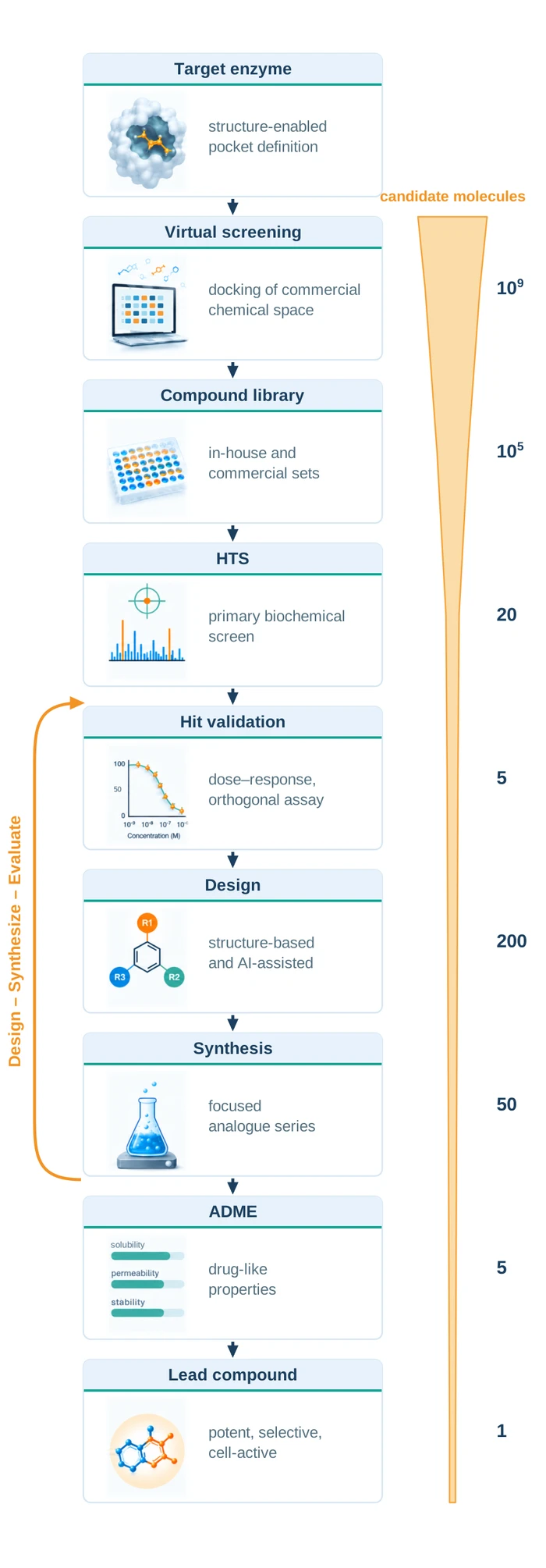
Our group builds small molecules that interfere with enzymes essential to viruses, tumors and metabolic diseases. We work across the full early-discovery path: from the first structural hypothesis about a binding site, through synthesis and screening, to optimized compounds with drug-like properties and documented activity in cells and animals.
Our roots lie in IOCB's nucleoside tradition, which we extend with heterocyclic medicinal chemistry, structure-based drug design, and in-house biochemical and cellular screening. This approach lets us move quickly from a new crystal structure to tested compounds.
RNA methyltransferases of viruses. Viruses cap their RNA to mimic the host and evade innate immunity. We target the enzymes that build those caps — SARS-CoV-2 nsp14 and nsp16, the mpox 2'-O-methyltransferase VP39, and flaviviral NS5, and have delivered some of the most potent inhibitors reported for several of them, together with the co-crystal structures that explain how they bind.
Human methyltransferases. The same chemistry speaks to human enzymes. We have described the first reported inhibitors of the protein lysine methyltransferase METTL21A, opening a target with no available chemical tools until now, and we are developing bisubstrate inhibitors of nicotinamide N-methyltransferase (NNMT), a metabolic methyltransferase implicated in obesity and cancer.
Nuclear receptors and metabolic disease. Our agonists of the constitutive androstane receptor (CAR) and antagonists of the pregnane X receptor (PXR) lower lipids in humanized mouse models.
Protein kinases in oncology and inflammation. Our kinase programs include FLT3-ITD inhibitors for acute myeloid leukemia, selective RIPK2 and RIPK3 inhibitors for inflammatory disease, and haspin inhibitors built on the sangivamycin scaffold.
Innate immunity agonists. With our expertise in the synthesis of cyclic dinucleotide analogs as STING agonists, we investigate how these second messengers, which are mostly studied for their use in cancer immunotherapy, influence other pathogens, such as viruses.
Our discovery engine combines high-throughput biochemical screening (fluorescence-polarisation and EchoMS assays) with computer-aided and AI-assisted design/docking. With our synthetic experience and expertise, long-term collaboration with structural biologists, as well as access to the well-equipped IOCB core facilities (Chemical Pharmacology, IOCB Compound Library, Analytical Laboratory, and others), our group represents the whole package of the early stages of drug discovery. The loop from design to tested compound is short, which allows a small academic group to pursue difficult targets.
Publications
All publications


