


Projects
Our programs share a method rather than a disease area. We identify an enzyme or receptor whose structure suggests it can be drugged, design a proposed inhibitor and test that molecule rigorously. Below are currently active projects in the group.
Targeting viral RNA capping
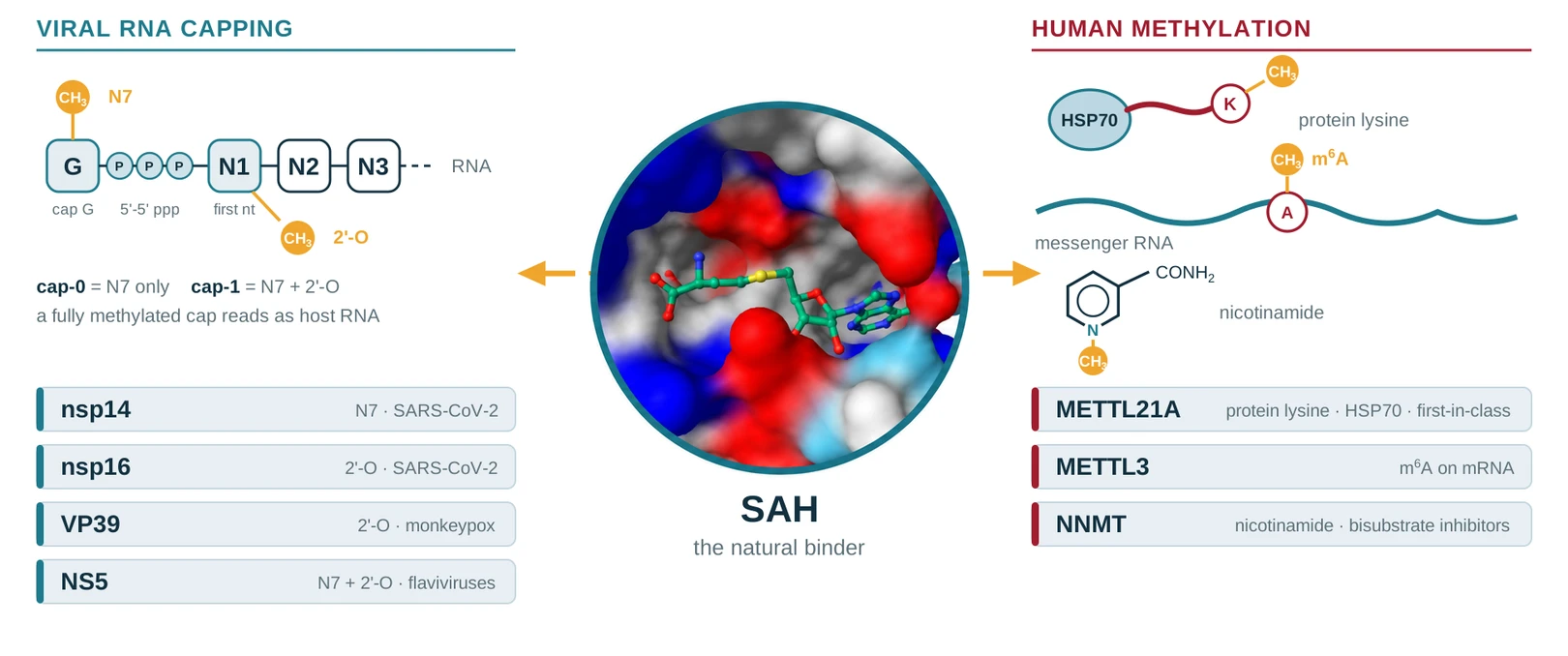
To replicate, RNA viruses must disguise their genomes as host RNA by adding a methylated cap. The enzymes that do this - nsp14 and nsp16 in coronaviruses, VP39 in poxviruses, NS5 in flaviviruses, and others - are essential, structurally well characterized, and almost untouched by approved drugs. We design and synthesize analogues of S-adenosyl-L-homocystein, and bisubstrate inhibitors that occupy both the cofactor and the RNA site at once. As much as possible, we base our proposed molecules on co-crystal structures.
We have reported nanomolar inhibitors of SARS-CoV-2 nsp14, allosteric inhibitors acting through a cryptic pocket in nsp16, and inhibitors of mpox VP39 that suppress the virus in cell culture. Structural work shows that one chemotype can address multiple methyltransferases, a useful observation for pandemic preparedness, where breadth matters more than optimization against a single pathogen.
Human methyltransferases as drug targets
Methylation of proteins, RNA and small-molecule metabolites governs gene expression, RNA stability, the DNA damage response and metabolic flux. Several of the enzymes responsible are strongly implicated in cancer and metabolic disease, and most still lack selective inhibitors. We adapt similar chemical approaches developed for viral enzymes to human methyltransferases, using structural information to gain selectivity within a family whose cofactor site is highly conserved.
We have described the first inhibitors of METTL21A - a protein lysine methyltransferase for which no chemical probe previously existed - and we are developing bisubstrate inhibitors of nicotinamide N-methyltransferase (NNMT), an enzyme that methylates a small-molecule metabolite rather than a biopolymer and is linked to obesity, diabetes and several cancers.
Nuclear receptor modulators for metabolic disease
CAR and PXR are ligand-activated transcription factors that control lipid and drug metabolism in the liver. Modulating them therapeutically has been limited by species differences and by the breadth of genes they regulate. Medicinal chemistry on imidazo[1,2-a]pyridine and related scaffolds, with pharmacology in receptor-humanized mice, was used to separate the desired metabolic effects from unwanted induction of drug-metabolizing enzymes.
The combined CAR agonist/PXR antagonist MI-883 is hypolipidaemic in a diet-induced hypercholesterolemia model. The PXR antagonist MI-891 lowers hepatic triglycerides in humanized mice, and we have described a PXR degrader as a further pharmacological strategy.
STING agonists for immunotherapy
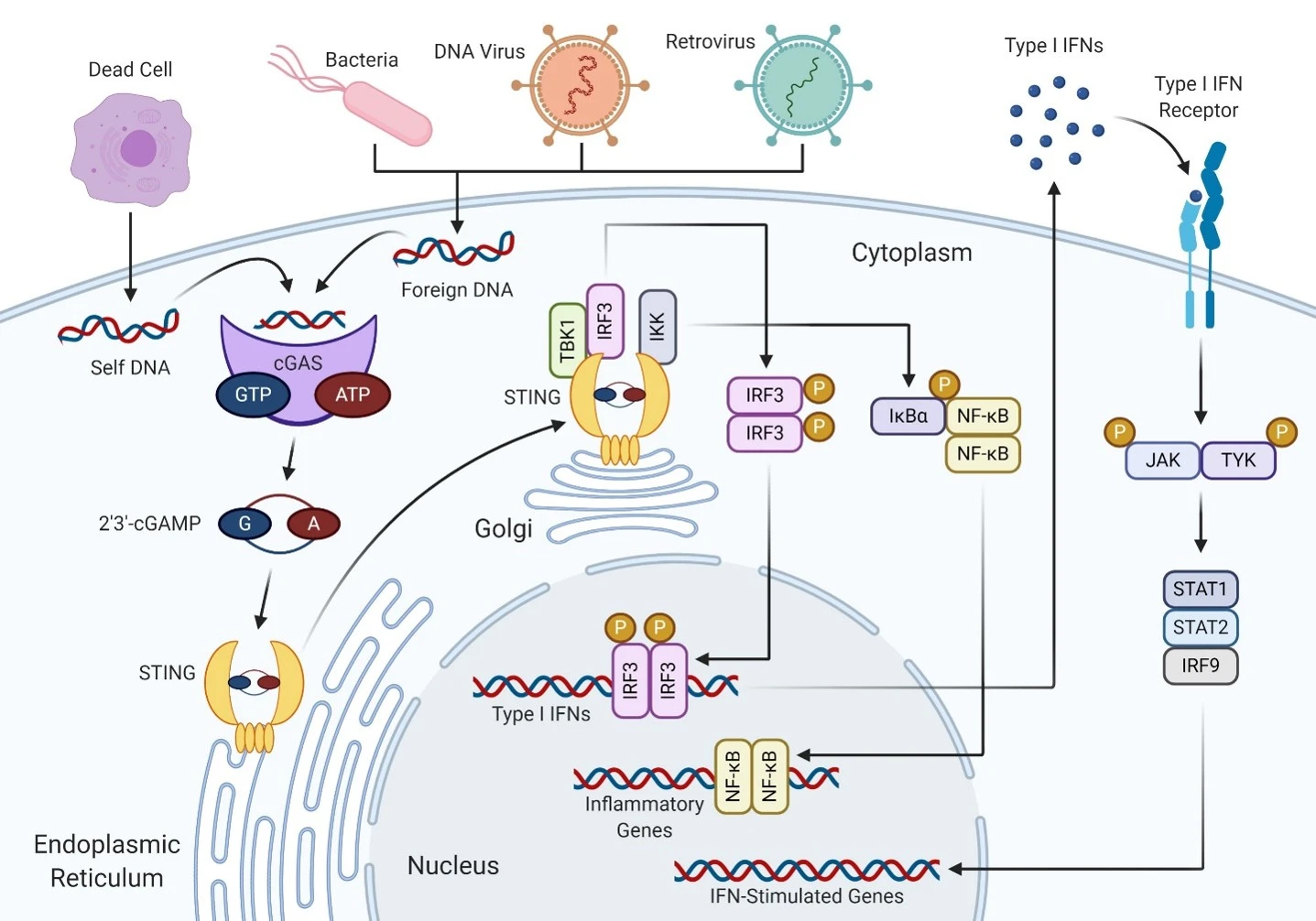
The STING pathway is a direct route to activating innate immunity against tumors, but natural cyclic dinucleotide agonists are chemically fragile and rapidly degraded. We redesign the cyclic dinucleotide backbone - vinylphosphonate linkages, isonucleotidic connectivity, fluorination of the sugar - to keep high affinity for STING while resisting phosphodiesterases and nucleases.
Several analog series show enhanced STING-mediated antitumor activity, and co-crystal structures explain both their affinity and their resistance to cleavage. The work is carried out together with the Birkuš and Bouřa groups at IOCB as well as Eyer‘s team at VUVEL, Brno
Kinase inhibitors for cancer and inflammation
Kinase inhibitors are a developed drug class, with over 100 small-molecule inhibitors approved by the FDA. The majority of these drugs target various types of cancer, and current research in this field must be backed by compelling arguments – improvement of a selectivity profile or tackling a resistance spectrum that existing drugs omit.
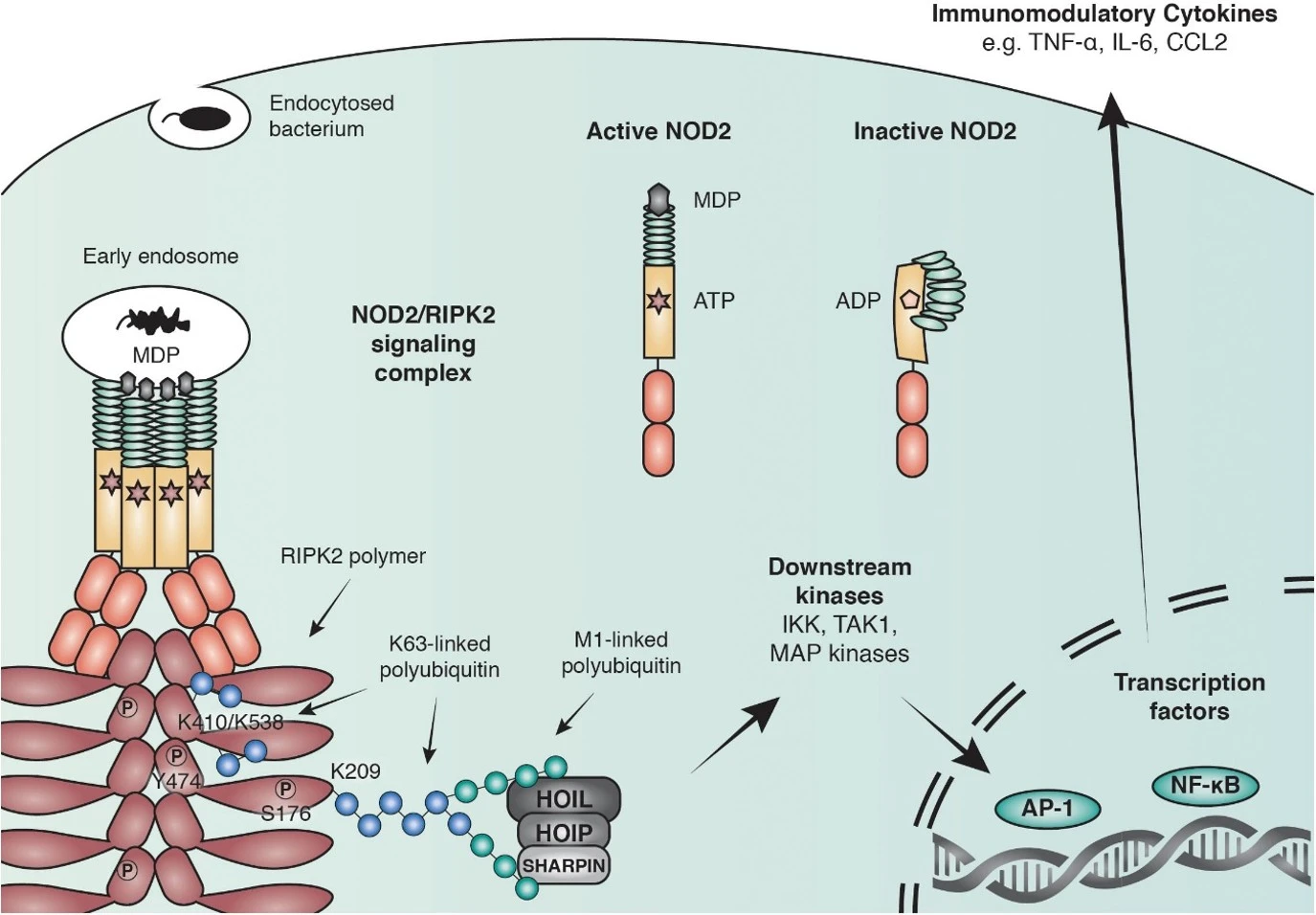
Scaffold hopping and systematic exploration of substitution patterns, supported by synthetic methodology that we develop where the required heterocycles are not readily accessible. Our imidazo[1,2-b]pyridazine inhibitors of FLT3-ITD are active in acute myeloid leukemia models; our thieno[2,3-d]pyrimidines are potent and specific inhibitors of RIPK2; and C7-sulfonamide 7-deazaadenosines give us haspin inhibitors from the sangivamycin scaffold
Chemical biology, probes and platform
Many biological hypotheses cannot be tested without a selective small molecule, and many small molecules cannot be interpreted without good analytics. We develop compounds as tools - accepting lower potency in exchange for clean selectivity - and we invest in the methods that make screening and metabolite identification reliable.
Our inhibitors of the ATG12–ATG3 protein–protein interaction give selective control of autophagy; phenotypic profiling with our compound collection identified autophagy as a targetable vulnerability of senescent cells; our probes of SWI/SNF have helped define enhancer programs in leukemia; and we contributed to MSnLib, an open multi-stage fragmentation spectral library for small-molecule identification